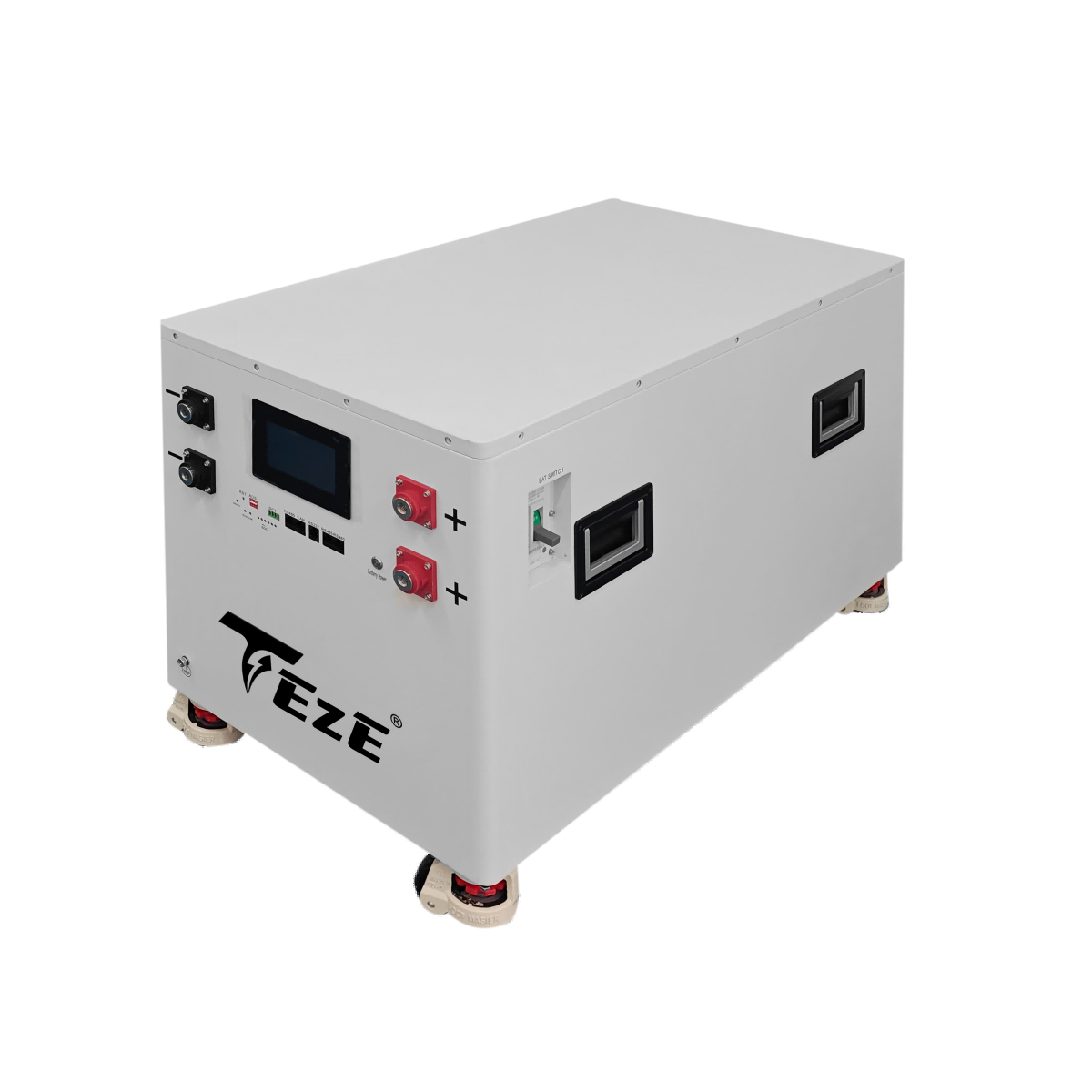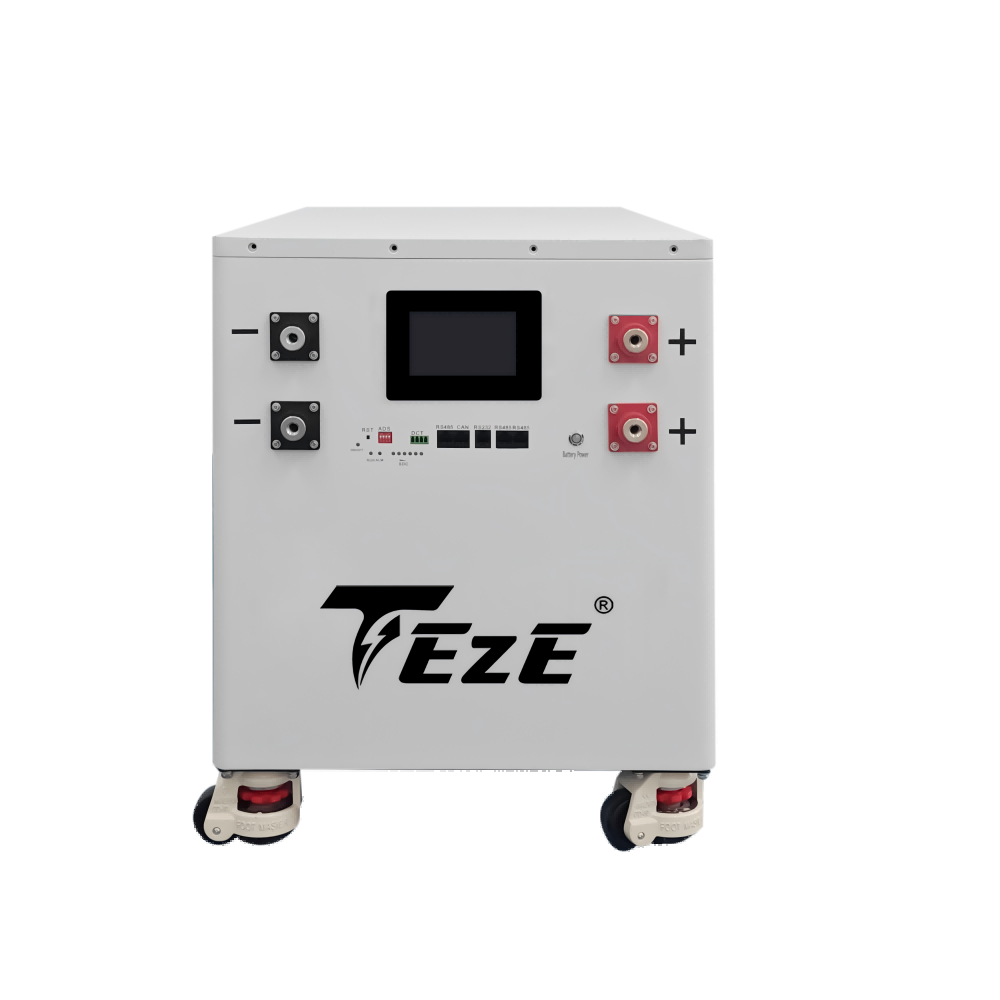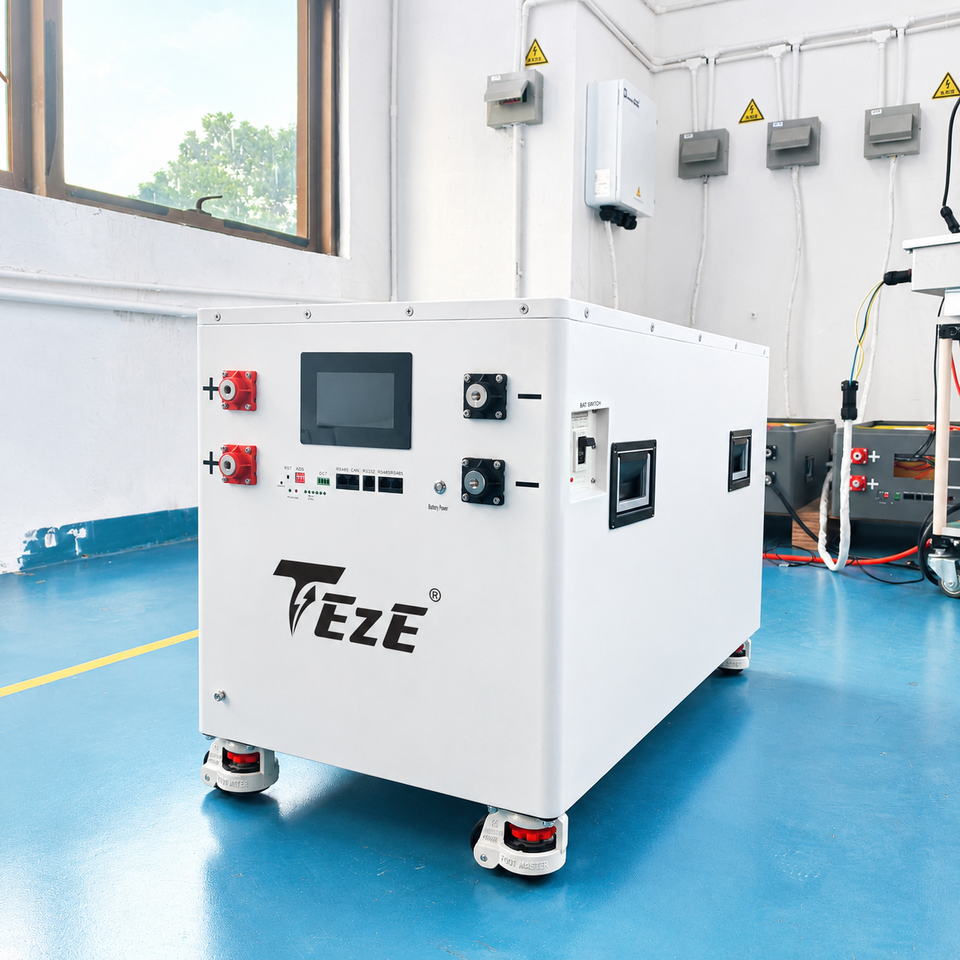
48V LiFePO4 Battery for Solar Storage: Complete Guide to Battery & Inverter Integration
Aug 29,2026 | TezePower
48V LiFePO4 Battery for Solar Storage: How to Match a Battery with an Inverter
As residential solar energy systems become more popular, homeowners are looking for better ways to store excess solar power and use it when electricity demand is higher or solar production is low.
A 48V LiFePO4 battery is one of the most practical battery options for residential solar energy storage. When paired with a compatible hybrid inverter, a 48V battery storage system can store excess solar energy during the day and provide power to household loads when needed.
However, choosing a solar battery is not simply about selecting a battery with the right voltage. The battery capacity, discharge current, inverter power, BMS communication, charging parameters and system architecture all need to work together.
In this guide, we explain how a 48V LiFePO4 battery works with a solar inverter, what you should check before purchasing, and how to choose the right battery capacity for a home energy storage system.
What Is a 48V LiFePO4 Battery?
A 48V LiFePO4 battery is a lithium iron phosphate battery designed around a nominal system voltage of approximately 48V.
For many modern LiFePO4 batteries, the actual nominal voltage is 51.2V, typically using 16 cells connected in series.
This is why you may see both 48V LiFePO4 battery and 51.2V LiFePO4 battery used to describe similar residential energy storage products.
LiFePO4, or lithium iron phosphate, is widely used for stationary energy storage because it offers a combination of long cycle life, thermal stability and reliable performance.
For a home solar system, the battery stores DC electricity while the inverter manages the conversion between DC battery power and the AC electricity used by household appliances.
How Does a 48V LiFePO4 Battery Work with a Solar Inverter?
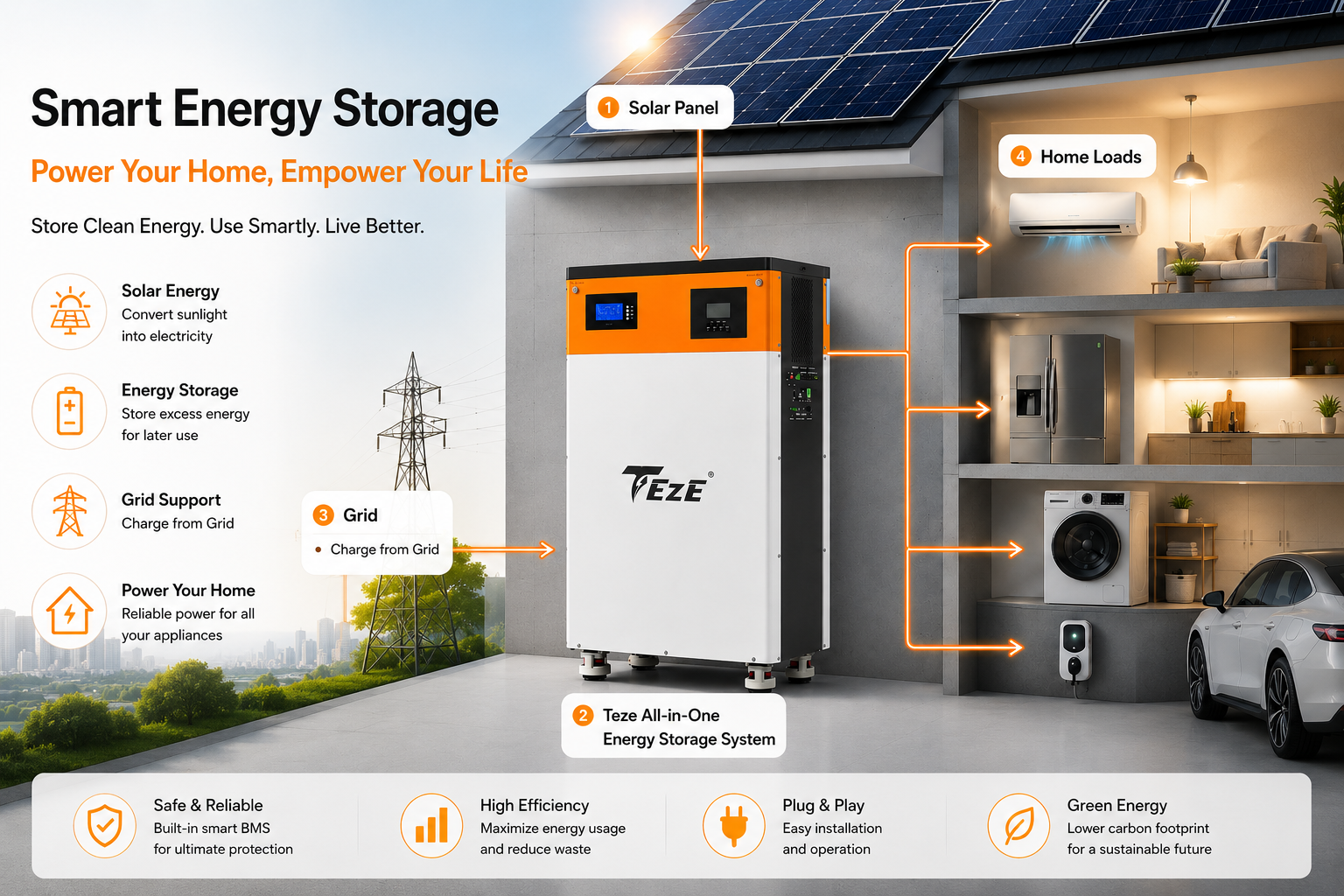
A typical solar-plus-storage system can include:
Solar Panels → Hybrid Inverter → Home Loads
with the battery connected to the inverter:
Solar Panels → Hybrid Inverter ↔ 48V LiFePO4 Battery → Home Loads
The inverter manages the flow of electricity between the solar panels, battery, household loads and grid.
During the day, solar panels generate electricity. The system can first supply household loads, while excess energy can be directed toward battery charging.
When solar production decreases, the stored energy can be discharged through the inverter to power household appliances.
This type of solar-plus-storage architecture allows energy to be generated at one time and used later.
Typical Energy Flow
Solar Energy
↓
Hybrid Inverter
↓
48V / 51.2V LiFePO4 Battery
↓
Home Appliances
The grid can also be connected to the inverter depending on the system configuration.
Why Choose LiFePO4 for Home Solar Energy Storage?
1. Long Cycle Life
A properly designed LiFePO4 battery can provide thousands of charge and discharge cycles.
This makes LiFePO4 suitable for applications where the battery is regularly charged by solar energy and discharged to supply household loads.
2. Stable Battery Chemistry
LiFePO4 is known for its stable chemistry, making it a popular choice for stationary energy storage applications.
A properly designed battery system should also include a Battery Management System (BMS) to monitor and protect the battery during operation.
3. High Usable Energy
Compared with traditional lead-acid battery systems, LiFePO4 can provide a practical solution for storing larger amounts of energy in a relatively compact system.
4. Suitable for Solar Energy Storage
Solar power generation varies throughout the day.
A battery allows excess solar electricity to be stored instead of immediately being exported or unused.
This stored energy can then be used during the evening, at night or when solar production is temporarily reduced.
48V vs 51.2V LiFePO4 Battery: What's the Difference?
One of the most common questions from solar battery buyers is:
Is a 51.2V battery the same as a 48V battery?
In many LiFePO4 energy storage systems, the answer is essentially yes from a system-classification perspective.
A typical 51.2V LiFePO4 battery uses 16 LiFePO4 cells connected in series:
3.2V × 16 = 51.2V nominal voltage
The term 48V battery is commonly used as the system voltage class, while 51.2V describes the nominal voltage of the 16-cell LiFePO4 configuration.
Therefore, when looking for a 48V solar battery, you will often encounter products listed as:
-
48V LiFePO4 Battery
-
51.2V LiFePO4 Battery
-
48V Solar Battery
-
51.2V Solar Battery
The important point is not simply the name. You should always check the battery's actual voltage range and confirm that it falls within the operating range supported by your inverter.
How to Choose the Right Battery Capacity
Battery capacity is usually measured in kWh, while inverter output power is measured in kW.
kWh = how much energy the battery can store
kW = how much power the system can deliver at a given time
For example, a 15kWh battery can theoretically store around 15kWh of energy, while a 5kW inverter can deliver up to approximately 5kW of AC output under suitable operating conditions.
The actual usable energy depends on factors such as battery operating limits, depth of discharge, temperature, system efficiency and inverter losses.
Simple Example
If your home uses approximately:
-
5kWh per day → a smaller battery may be sufficient
-
10kWh per day → a medium-capacity battery may be more suitable
-
15–20kWh per day → a larger battery can provide longer backup and greater solar energy utilization
However, battery sizing should not be based only on daily electricity consumption.
You should also consider:
-
Peak household load
-
Required backup duration
-
Solar panel capacity
-
Inverter output power
-
Battery maximum discharge current
-
Whether additional batteries will be added later
How to Match a 48V LiFePO4 Battery with a Hybrid Inverter
This is one of the most important steps when building a solar energy storage system.
A battery and inverter may both be described as “48V,” but that does not automatically guarantee compatibility.
1. Battery Voltage
The inverter must support the battery's actual operating voltage range.
Do not compare only the nominal voltage.
Check the battery's:
-
Nominal voltage
-
Maximum charging voltage
-
Discharge cutoff voltage
-
Recommended operating voltage
Then compare these values with the inverter's battery input specifications.
2. Charge and Discharge Current
The inverter must also be compatible with the battery's maximum charge and discharge current.
For example, a high-power inverter may require a higher battery discharge current.
If the battery cannot safely provide the required current, the BMS may limit output or trigger protection.
Therefore, when selecting a battery, always compare:
Inverter power → Battery voltage → Required battery current
This is particularly important for high-power residential systems.
3. Battery Capacity
The battery should also have sufficient capacity for the intended application.
A larger inverter does not necessarily mean that you need a larger battery, but the battery must be able to support the inverter's operating requirements.
For example, a 5kW inverter paired with a very small battery may result in high discharge rates and limited backup duration.
A larger battery bank can provide more stored energy and may reduce the relative discharge rate under the same household load.
4. BMS Communication
The Battery Management System (BMS) is one of the most important parts of a modern LiFePO4 battery.
The BMS monitors parameters such as:
-
Cell voltage
-
Battery voltage
-
Current
-
Temperature
-
State of charge
-
Charging status
-
Protection status
Many modern solar batteries communicate with hybrid inverters through CAN or RS485.
With compatible communication, the battery can provide operating information and charge/discharge limits to the inverter.
Why CAN and RS485 Communication Matter
When purchasing a LiFePO4 battery for solar storage, it is worth checking whether the battery supports communication with your inverter.
Common communication interfaces include:
-
CAN
-
RS485
However, having the same physical communication port does not necessarily mean two products are compatible.
The communication protocol and configuration must also be supported.
Before installation, confirm:
-
Inverter model
-
Battery model
-
Supported communication protocol
-
CAN or RS485 connection
-
Communication cable pinout
-
Compatible BMS protocol
-
Required inverter battery settings
This can prevent common problems such as inaccurate state-of-charge readings, communication errors and unexpected charging or discharging limits.
What Is an All-in-One Solar Energy Storage System?
For homeowners who want a simpler installation, an all-in-one energy storage system integrates several components into a single system.
Depending on the model, an all-in-one ESS can integrate:
-
LiFePO4 battery
-
BMS
-
Hybrid inverter
-
MPPT solar charge controller
-
Communication interfaces
-
Protection components
For example, a TezePower all-in-one energy storage system combines a 51.2V LiFePO4 battery with an integrated inverter and MPPT system, reducing the number of separate components required for a residential installation.
This type of design can be particularly attractive to homeowners who want a cleaner installation and simpler system configuration.
Why an All-in-One Battery Can Be Easier to Install
Cleaner Installation
Fewer separate devices can make the overall installation more organized.
Simplified System Design
The battery and inverter are designed to operate as part of the same system.
Easier Operation
Users can monitor and manage the energy storage system through the integrated control system, depending on the model.
Better Space Utilization
Combining multiple components into one cabinet can reduce the overall installation footprint.
How Much Solar Energy Can a 48V Battery Store?
The answer depends on the battery capacity.
| Battery Capacity | Typical Application |
|---|---|
| 5kWh | Apartment / small home backup |
| 10kWh | Small residential solar storage |
| 15kWh | Medium home energy storage |
| 16kWh | Whole-home backup / larger loads |
| 20kWh+ | Larger homes / extended backup |
These are general examples rather than strict sizing rules.
The ideal capacity depends on your electricity consumption, solar generation, backup requirements and inverter configuration.
For a larger home, multiple battery modules can sometimes be connected in parallel if the battery and inverter support system expansion.
What Can a 48V Solar Battery Power?
A properly sized residential energy storage system can support many common household loads, including:
-
Refrigerator
-
Washing machine
-
Television
-
Lighting
-
Internet equipment
-
Air conditioning
-
Kitchen appliances
-
Home office equipment
-
Other essential household loads
The actual loads that can operate simultaneously depend primarily on the inverter's output power, not just the battery's kWh capacity.
For example, a 15kWh battery may store a significant amount of energy, but if the inverter is rated at 5kW, the system should be designed around the inverter's power output and operating limits.
This is why battery capacity and inverter power should always be evaluated together.
48V LiFePO4 Battery for Grid-Tied, Hybrid and Off-Grid Solar Systems
A 48V/51.2V LiFePO4 battery can be used in different solar storage configurations, depending on the inverter and system architecture.
Grid-Connected Solar Storage
The battery can store excess solar energy and provide energy later.
This can help increase the amount of solar energy used within the home.
Backup Power
If the inverter supports backup operation, the battery can supply selected household loads when grid power is unavailable.
Off-Grid Solar
In an off-grid system, the battery becomes an important part of the energy system because solar production is not available continuously.
The battery stores energy for use when solar generation is low or unavailable.
The exact operating mode depends on the inverter, battery and system configuration.
7 Things to Check Before Buying a 48V LiFePO4 Solar Battery
1. Battery Voltage
Confirm whether the system requires a 48V-class or 51.2V LiFePO4 battery.
2. Battery Capacity
Choose the kWh capacity based on your daily consumption and backup requirements.
3. Inverter Power
Make sure the inverter output is suitable for your expected household loads.
4. Maximum Discharge Current
Confirm that the battery can safely support the inverter's required current.
5. BMS Communication
Check whether the battery supports your inverter's CAN or RS485 communication requirements.
6. Expandability
If you may need more storage in the future, confirm whether additional batteries can be connected in parallel.
7. Installation and Support
Check installation requirements, documentation, warranty and technical support before purchasing.
TezePower 51.2V LiFePO4 All-in-One Energy Storage
For homeowners looking for a simplified solar storage solution, TezePower offers 51.2V LiFePO4 all-in-one energy storage systems designed to combine battery storage and power conversion in one integrated unit.
Depending on the model, the system can integrate:
-
LiFePO4 battery storage
-
Built-in BMS
-
Built-in inverter
-
MPPT solar charging
-
CAN / RS485 communication
-
Plug & Play system design
TezePower high-capacity all-in-one systems are designed for residential solar storage, backup power and energy independence applications.
Instead of purchasing the battery and inverter as completely separate systems, an integrated ESS provides a more streamlined solution for homeowners who want a ready-to-install energy storage system.
Frequently Asked Questions About 48V LiFePO4 Solar Batteries
Is a 51.2V battery the same as a 48V LiFePO4 battery?
A 51.2V LiFePO4 battery is commonly considered a 48V-class battery.
The 51.2V nominal voltage typically comes from 16 LiFePO4 cells connected in series.
Always check the actual voltage range and inverter specifications before installation.
Can I use any 48V inverter with a 48V LiFePO4 battery?
No.
The nominal voltage alone does not guarantee compatibility.
You should also check voltage range, charge/discharge current, BMS communication and supported battery protocols.
Can LiFePO4 batteries be used with solar panels?
Yes.
LiFePO4 batteries are widely used in solar energy storage systems.
A compatible inverter or charge controller manages charging and discharging between the solar system and battery.
How long can a 48V battery power my home?
It depends on battery capacity and household power consumption.
For example, a 15kWh battery theoretically contains more stored energy than a 10kWh battery, but actual usable energy depends on operating conditions and system efficiency.
Is a larger battery always better?
Not necessarily.
The battery should be sized according to your electricity consumption, solar generation, inverter power and backup requirements.
An oversized battery may increase the initial cost without providing proportional benefits.
Should I choose a separate battery and inverter or an all-in-one ESS?
For homeowners who prefer a simpler installation, an all-in-one system can reduce the number of separate components and simplify system integration.
For larger or highly customized installations, separate batteries and inverters may provide greater flexibility.
Final Thoughts
A 48V LiFePO4 battery can be an effective foundation for a residential solar energy storage system, but the battery should never be selected in isolation.
The best-performing system is one where the:
Solar Panels + Battery + BMS + Inverter + Household Loads
are correctly matched.
When choosing a 48V solar battery, pay particular attention to battery capacity, inverter power, operating voltage, maximum current, BMS communication and future expandability.
For homeowners who want a simpler installation, a 51.2V LiFePO4 all-in-one energy storage system can combine battery storage, inverter and solar charging functions into a single integrated solution.
With the right system design, solar energy generated during the day can be stored and used when your home needs it most—helping you make better use of your solar power and build a more flexible home energy system.
👉 Click here to learn more about our 15kWh All in One Battery and order now!
Enviar comentário